中文
中文 English

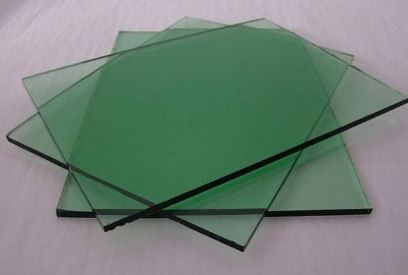
For glass doors and Windows, the flatness of the glass directly affects their aesthetic appeal. A good glass door has a smooth surface, but what about a inferior one? It is uneven, so consumers also pay great attention to the choice of glass doors.
Tempered glass manufacturers tell you the influencing factors of glass flatness
First, the overall uniformity of the furnace temperature: Tempered glass manufacturers believe that its quality affects the flatness of the glass and also influences stress spots. Because if the temperature of the furnace body is hot at the top and cool at the bottom, it will cause the glass to bend. However, if the temperature in the furnace is high at the beginning and low at the end, it may cause wavy ribs or shatter the glass. This is the overall poor uniformity of the furnace chamber. Therefore, this temperature unevenness will inevitably be reflected on the stress spots
Second, local uniformity: The local area is also crucial, especially having a more prominent impact on stress spots, followed by flatness and wave ribs.
Third, the stability of the furnace temperature: The furnace temperature should not fluctuate, and this is stability. Stability will naturally affect flatness and wavy ribs, but it does not necessarily affect stress spots. This mainly means that when the temperature is high, there are ripples, but when the temperature is low, they explode. As we all know, the flatness of glass depends on the symmetry of its top and bottom. When the temperature at the top and bottom fluctuates, you can never find a flat point, and the flatness will naturally be affected. Therefore, the stability of temperature is of vital importance.
Fourth, the overall uniformity of the air blowing: The overall uniformity of the air blowing will affect the flatness and also the stress spots. If the air blowing is uneven, it is the same as an uneven furnace temperature. If the air blowing is uneven, the glass will sometimes curl upwards and sometimes downwards, making it impossible to adjust. At the same time, the unevenness of the air blowing will inevitably manifest as stress spots. Therefore, the overall uniformity of the air blowing up, down, left and right is a fundamental and important aspect, as it has a significant impact on the flatness and stress spots of the glass
Fifth, local uniformity: In fact, eliminating stress spots is a very complex issue. Simply put, the position, size, Angle, height, depth, and chamfer of the wind eye all affect the stress spot. Just imagine, if a wind eye is blocked, there will definitely be a wind spot on the glass at that position. When punching holes, if they are of different sizes, can they be uniform?
There must be stress spots. To what extent the stress spots are, it depends on the difference in your precision. In addition, the smoothness of the inner wall of the hole is directly related to the air blowing speed. The difference in results caused by smoothness and roughness is quite significant. If the hole wall is very rough, the air blown out will be greatly hindered, and the impact will be considerable. It also includes the chamfering of the hole, whether it is chamfered or not, and the extent of chamfering has an impact.
Sixth, the symmetry of the up and down air blowing: There is an even more hidden issue here, the flatness of the ceramic roller conveyor. Although we all say that the quality of ceramic roller conveyors from abroad is guaranteed, if we only do a good job with the roller conveyor but lack precision during installation, with some being higher and some lower, won't there be wavy ribs again?
If the upper surface of the roller conveyor is to truly form a horizontal plane, where hard glass can be touched at every point and soft glass will not sink, and the supporting force of each roller conveyor on the glass is uniform, then the precision of the roller conveyor itself and the installation of the roller conveyor must be very high.
Whether it is the roller track in the furnace or that in the air grid, they are the same. Since the freshly baked glass is also soft, after it is taken out of the furnace, if the air grilles, roller conveyors are bent or installed unevenly, then the wavy ribs are also inevitable.
In addition, movement is also very important. The vibration and noise during movement have an impact. If the ceramic roller conveyor has a slight vibration and the softened glass shakes on it, it will definitely deform. The furnace roller conveyor is like this, and so is the air grid roller conveyor.